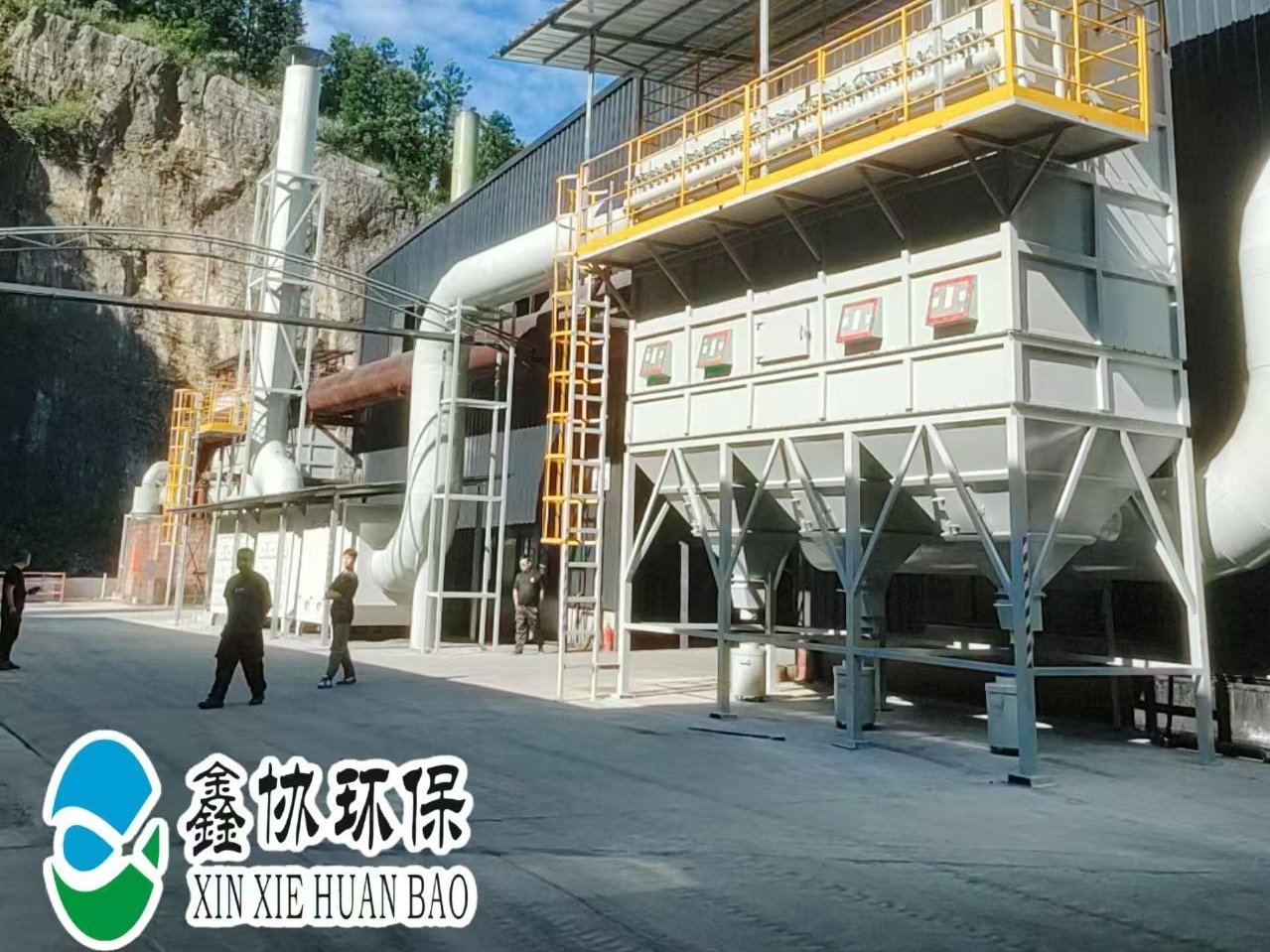
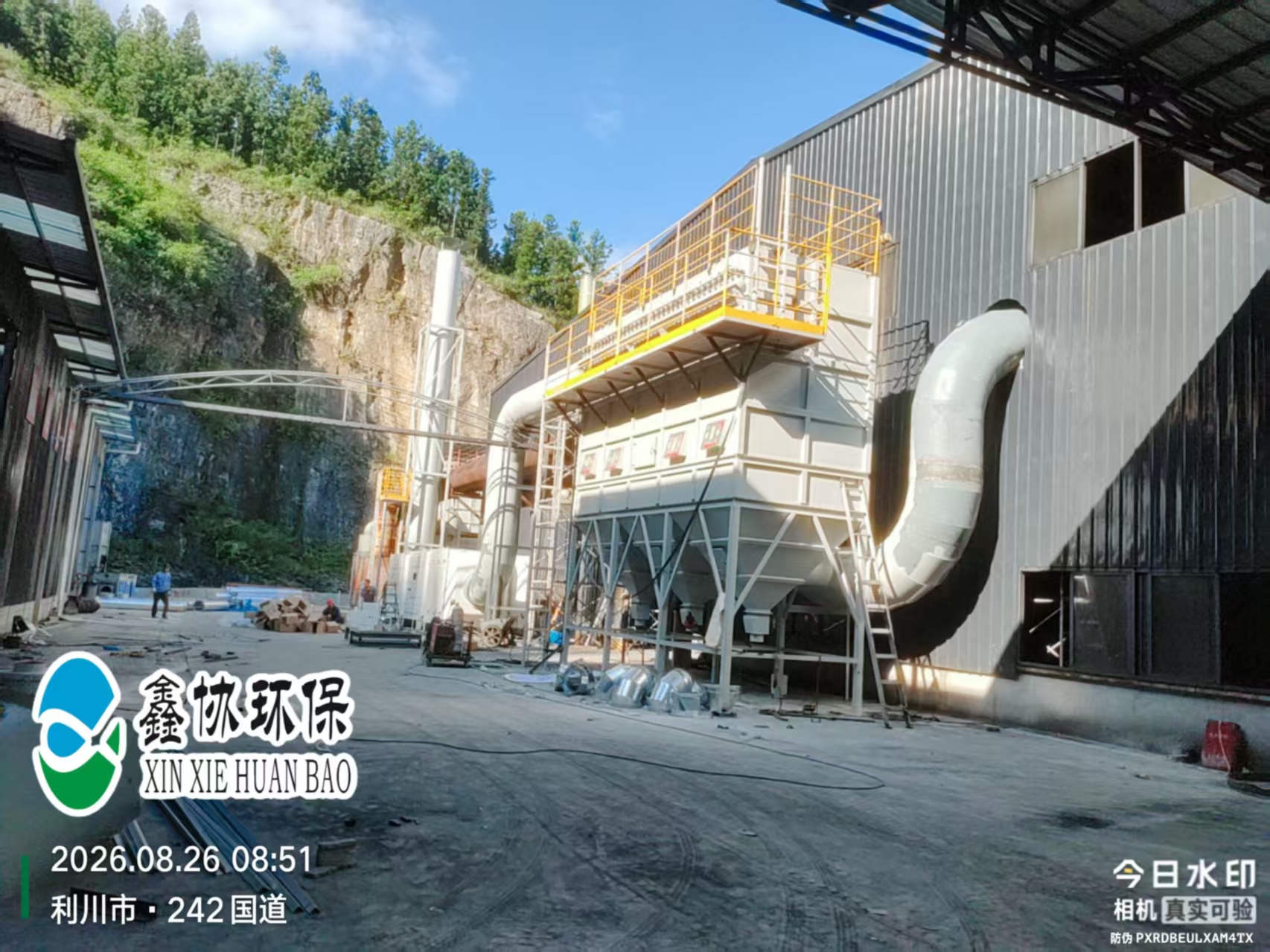
Design, fabrication and installation of a complete exhaust renovation for 10 waste aluminum-plastic pyrolysis rotary kilns in Lichuan, Hubei — 30 capture hoods, a DMC-420 pulse baghouse rated for 160–200 °C flue gas, two-stage activated carbon adsorption and a 33,600 m³/h VFD fan, discharging through two code-compliant 15 m stacks.
The plant recovers aluminum powder, pyrolysis oil and carbon black from waste aluminum-plastic composites via low-temperature pyrolysis. Ten rotary kilns run five at a time, and every kiln has three uncontrolled emission points — the charging port, the pressure-relief port and the oil-gas separation port — plus VOCs breathing losses from the wastewater pool and oil storage tanks. XinXie EP converted all of them into organized, treated discharge:
Emission targets were locked in the design documents and verified against the applicable national standards:
| Parameter | Committed Value |
|---|---|
| System design airflow (DA001) | 33,600 m³/h |
| Particulate removal | ≥ 99% (baghouse alone ≥ 99.5%) |
| Particulate at stack | ≤ 20 mg/m³ (GB 16297-1996 Table 2, Class II) |
| NMHC removal | ≥ 95% (two-stage activated carbon) |
| NMHC at stack | ≤ 100 mg/m³ |
| Odor concentration (DA002) | ≤ 2,000 (dimensionless, GB 14554-93 Class II) |
| Stack height | 15 m with sampling ports & platforms |
Pyrolysis flue gas carries both particulate (carbon black, aluminum dust) and a heavy load of hydrocarbon vapor — at temperatures that destroy ordinary filter media. The process train handles each problem in the right order.
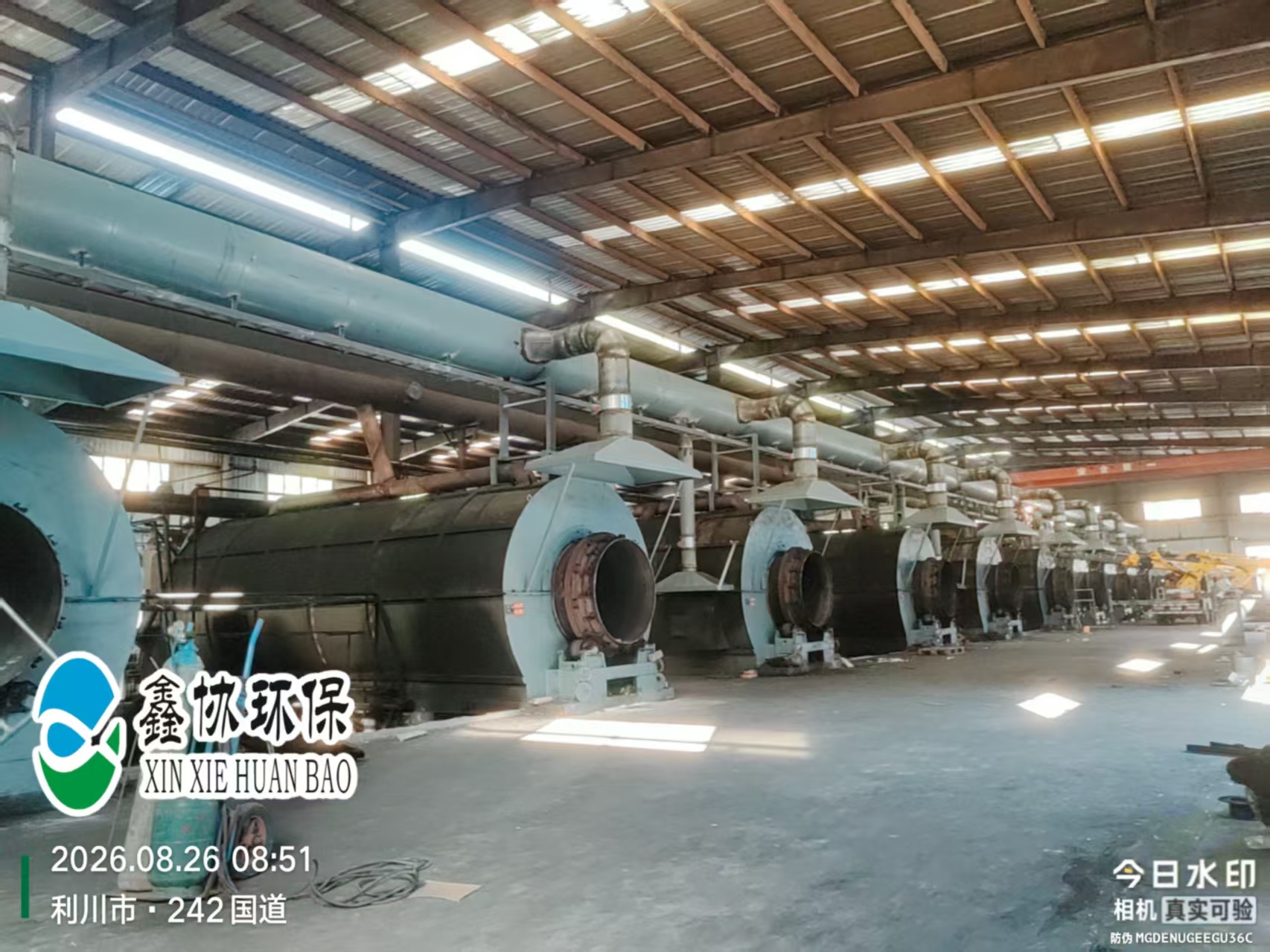
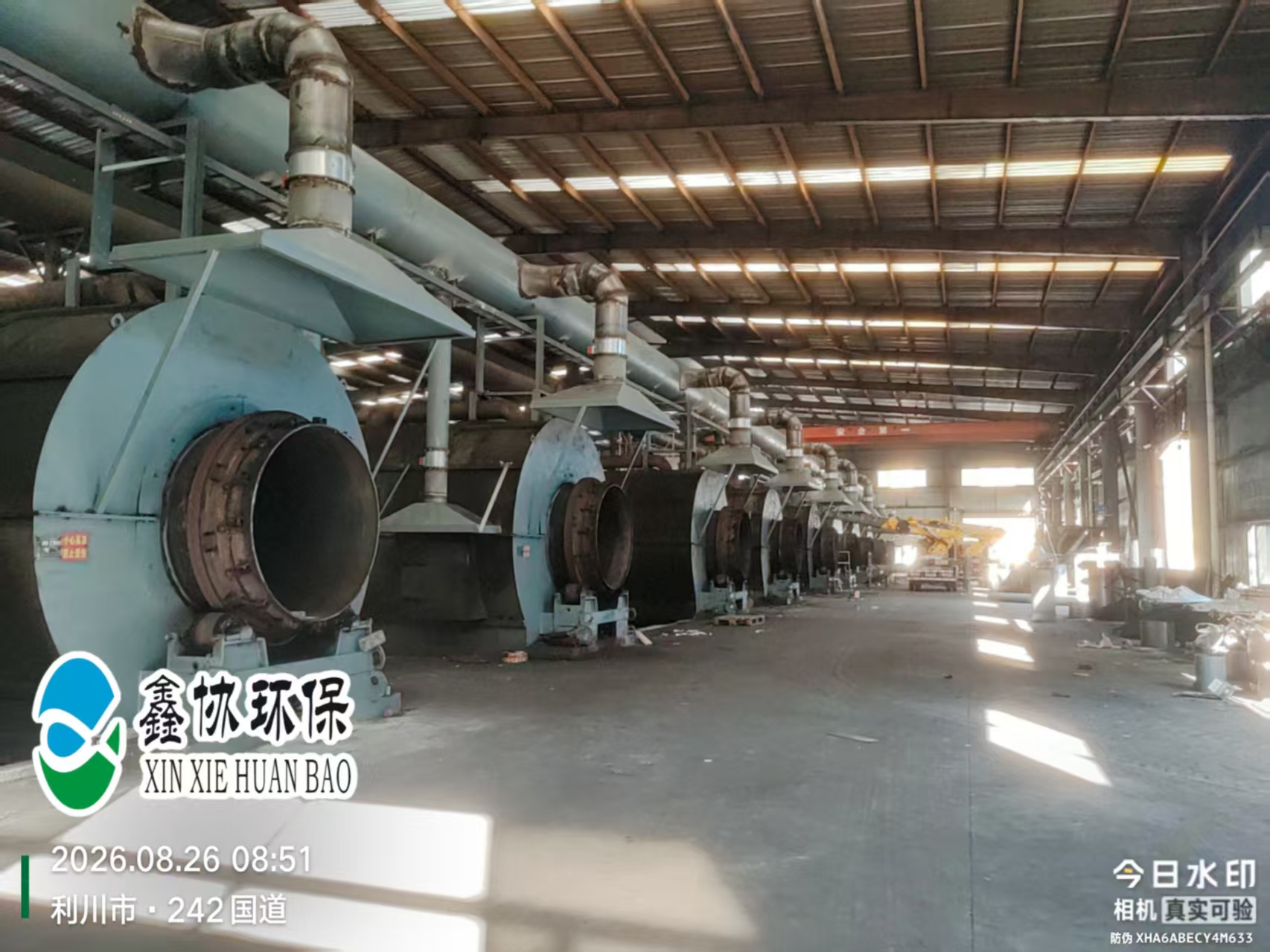
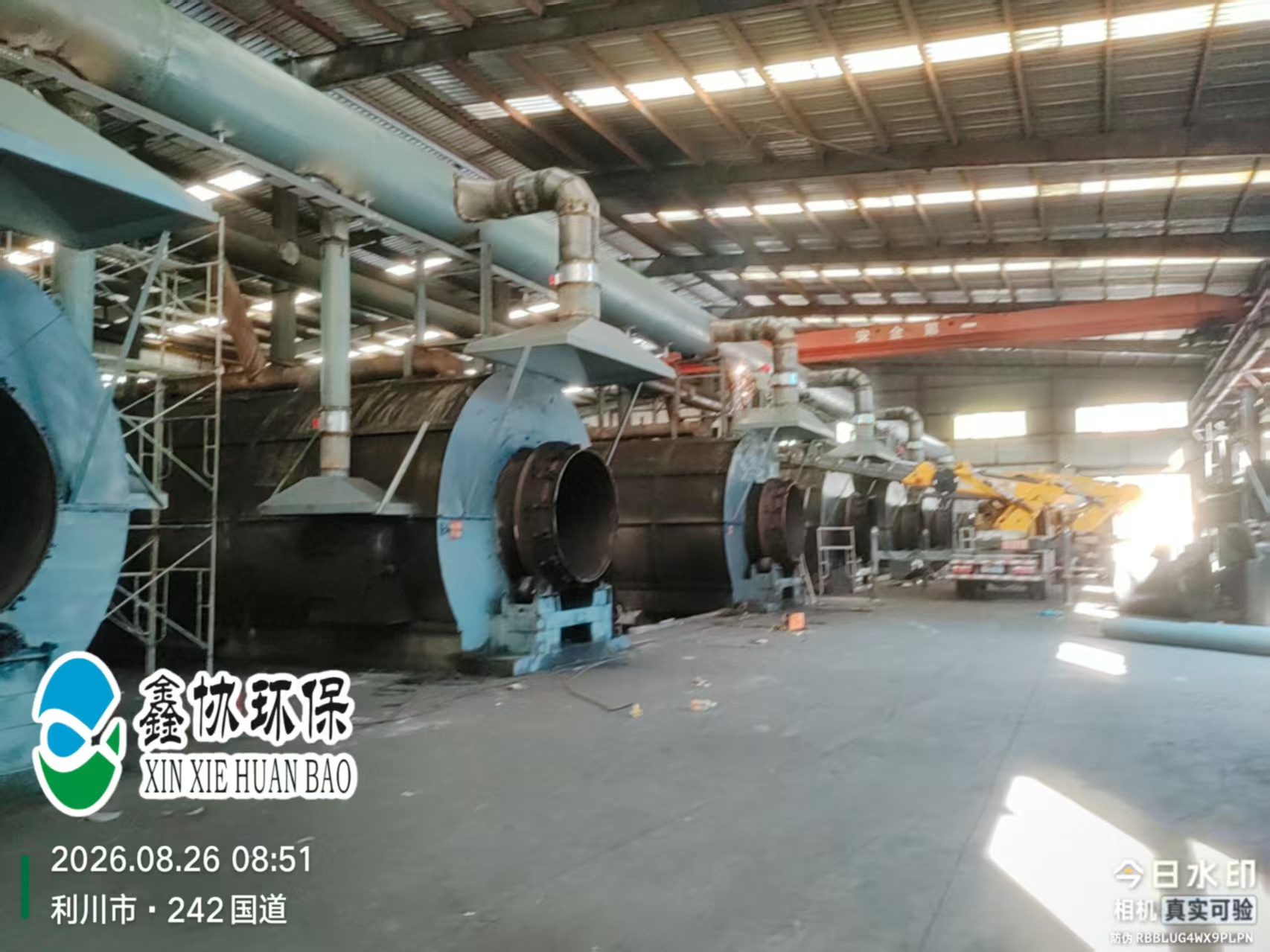
Tailor-made hoods seal the charging, pressure-relief and oil-gas separation ports of all 10 kilns. Branch ducts with electric dampers let any kiln be taken off-line while the 0.6 m/s capture velocity is maintained at the rest — no fugitive fume in the workshop.
Welded carbon-steel ducting collects the 30 branches into a single header routed along the kiln bay. Smooth interior walls and designed transport velocities prevent carbon-black settling and keep pressure loss low.
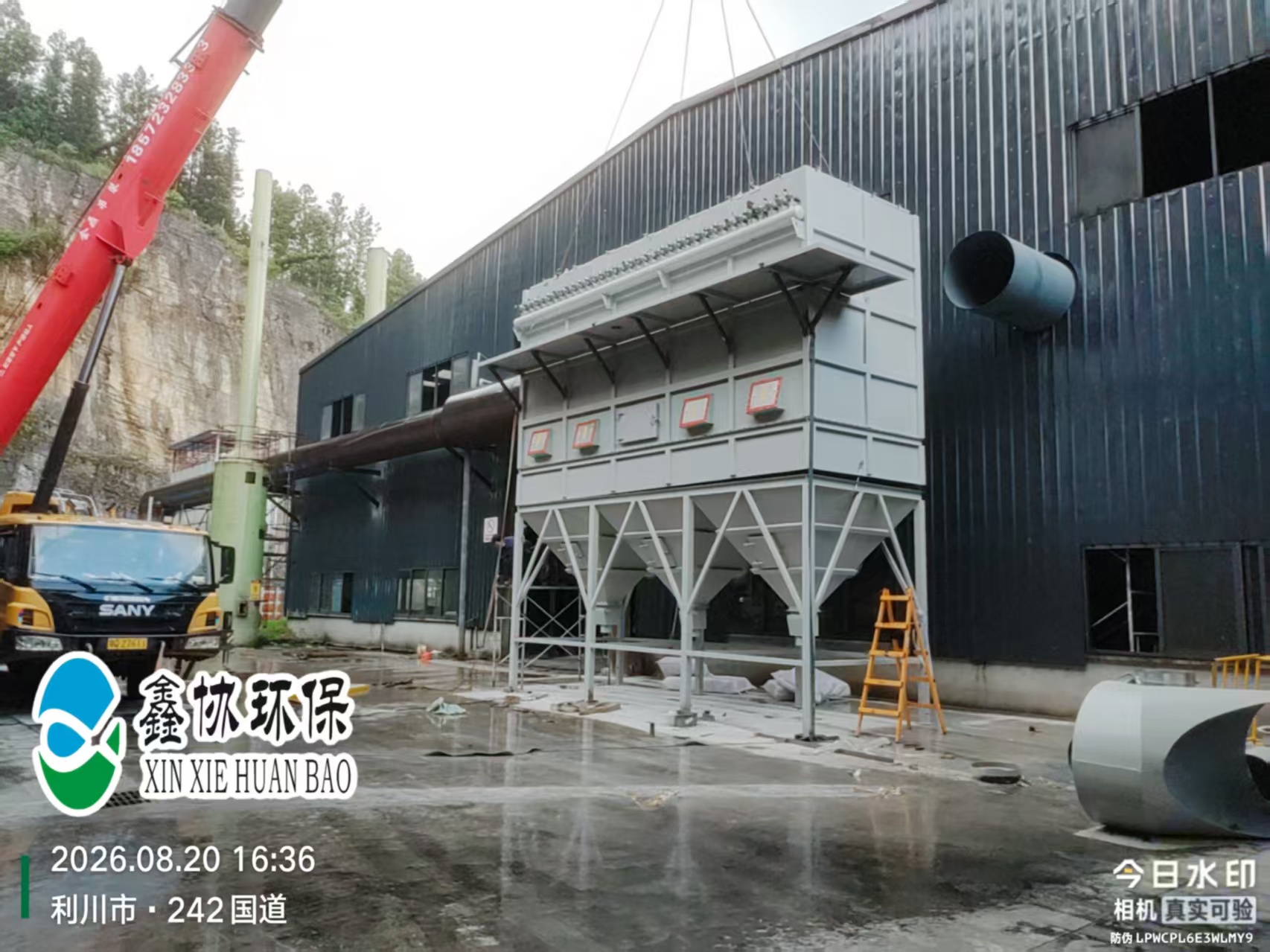
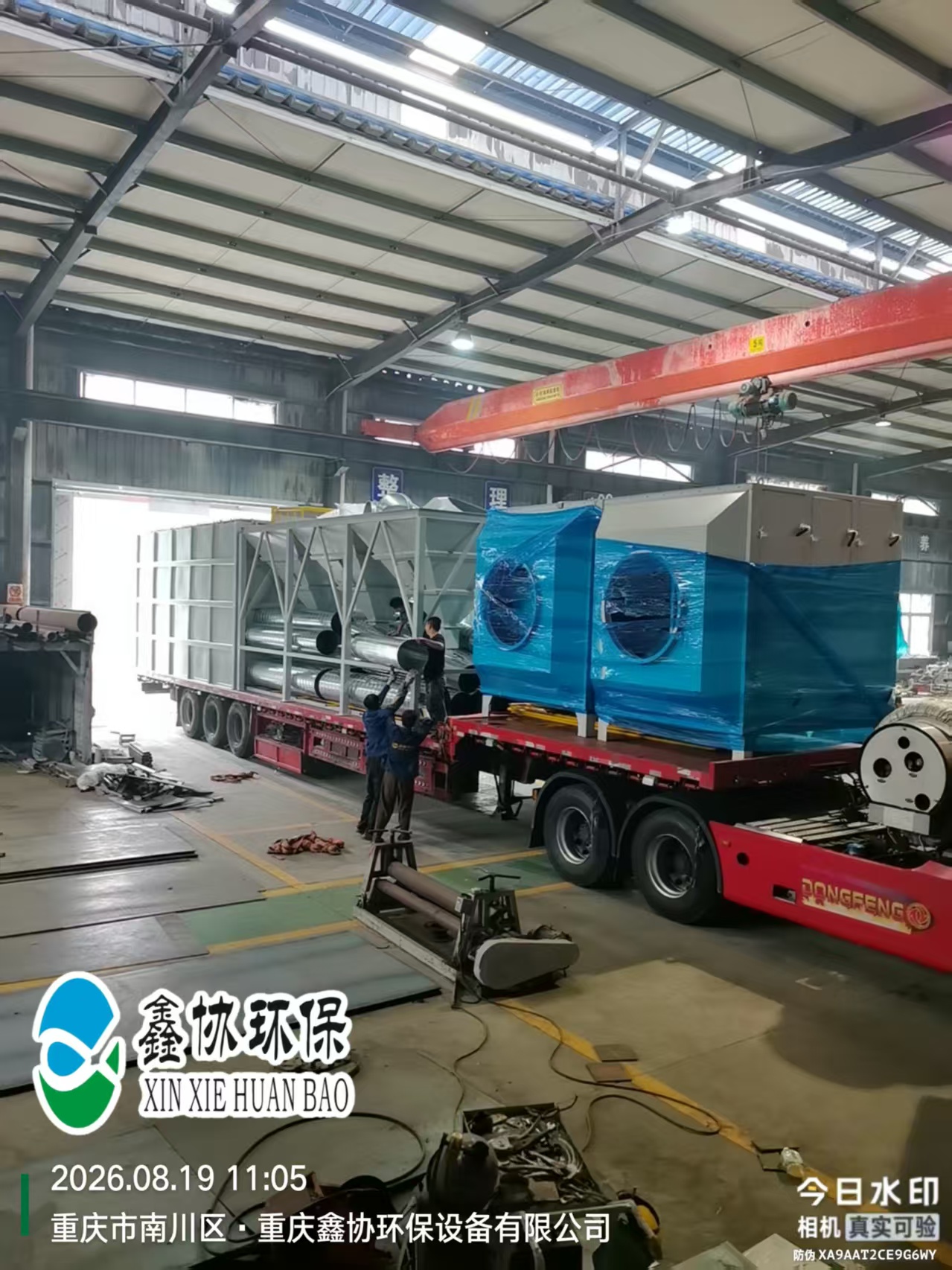
Three-compartment pulse-jet baghouse with FMS (fluoromes) needle-felt bags rated 160–200 °C — exactly the pyrolysis flue gas window. ≥ 99.5% dust removal, PLC-programmed offline pulse cleaning, weather-hooded outdoor installation with inspection platforms.
Series-connected Stage 1 + Stage 2 adsorbers remove non-methane hydrocarbons and odor with ≥ 95% efficiency — the second bed also polishes the first, so breakthrough never reaches the stack before a change-out is scheduled.
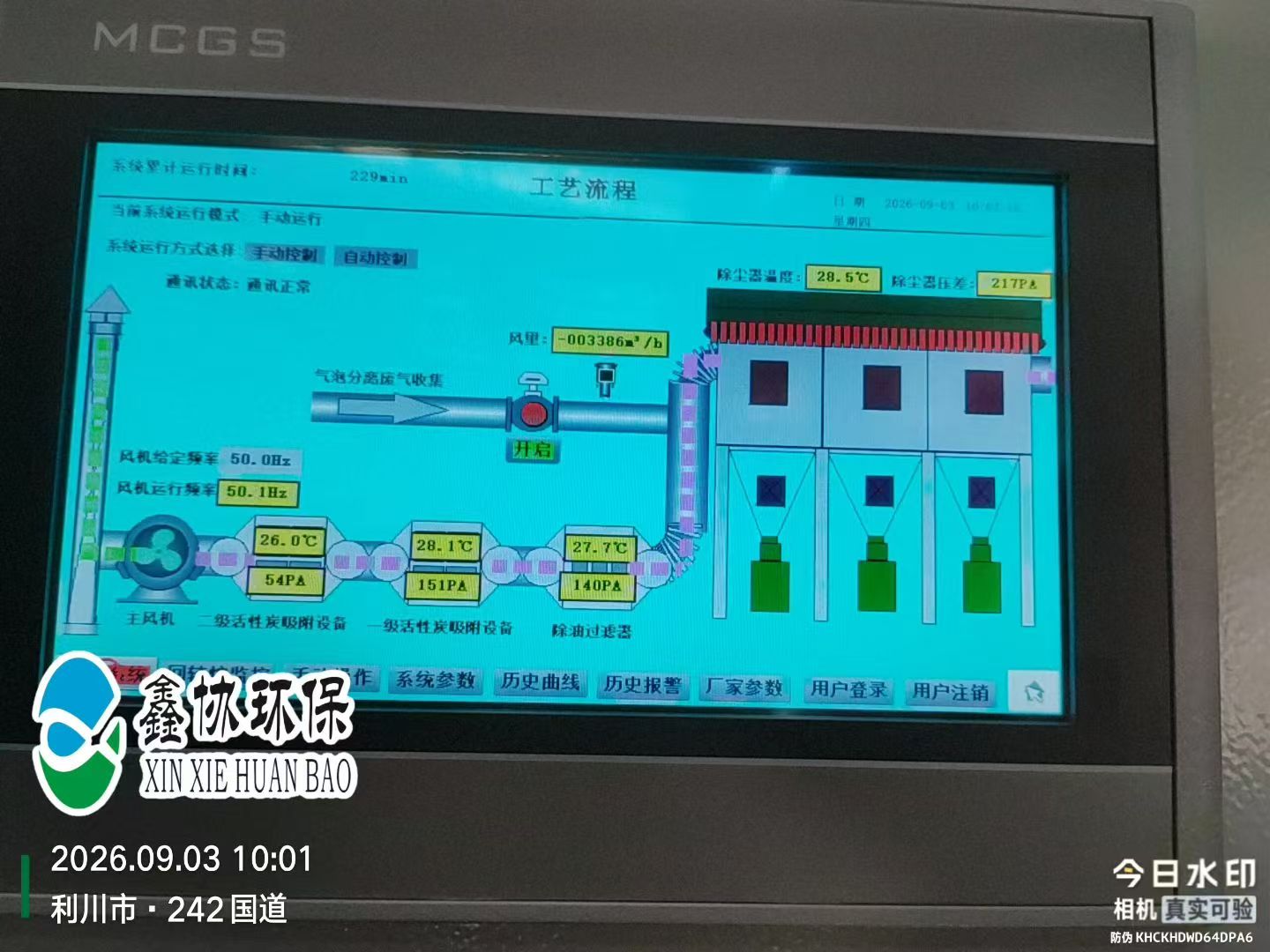
A 4-72 No.10C fan with 75 kW VFD duty-regulates the 33,600 m³/h system. The MCGS touchscreen HMI runs auto/manual modes, logs real-time trends (temperature, differential pressure, fan Hz), stores history curves and raises alarms — operators supervise, the PLC works.
Steel-framed enclosed rooms with translucent roofing convert the wastewater pool and oil tank farm from fugitive to organized sources. Existing alkali spray tower was retained for pre-scrubbing, then a new activated carbon adsorber and the existing 22 kW fan finish the train.
The whole renovation was designed and documented so the plant can face environmental inspection with confidence:
August–September 2026: hood rows and header ducting inside the kiln workshop, the MCGS control screen in daily operation, and the complete outdoor baghouse / two-stage carbon / stack train against the mountainside.
Hot, oily, dust-laden gas needs a train — not a single box. Send us your process and emission points for a written proposal with hood-by-hood airflow calculations within 24 hours.
Discuss Your Project