A centralized negative-pressure dust extraction system for 12 grinding and polishing stations — 10 nylon-fiber wheel polishing posts (including two new 1,200 × 600 mm work benches) and 2 belt sanding stations — engineered around one hard rule: no hot spark, ember or glowing particle ever reaches the cartridge filters. 15,000 m³/h at 2,800 Pa, fully automatic, AQ 4273-2016 compliant.
Steel grinding produces fine iron-oxide dust, grinding smoke and — the real hazard — a continuous spray of high-temperature sparks and glowing particles. Following the client's technical specification and workshop layout, every station received its own capture point, individually damper-balanced:
Committed values, verified against the specification book:
| Parameter | Committed Value |
|---|---|
| Rated airflow / total pressure | 15,000 m³/h / 2,800 Pa, negative pressure |
| Dust capture efficiency | ≥ 99% (hood face velocity ≥ 0.6 m/s) |
| Stack emission | PM ≤ 30 mg/m³ — better than the DB 50/418-2016 urban 50 mg/m³ limit |
| Filtration velocity | 0.99 m/min, below the GB 50019 1.2 m/min ceiling |
| Duct transport velocity | 20–22 m/s horizontal, ≥ 13 m/s vertical |
| Fan | 18.5 kW VFD, on the clean-gas side (negative pressure) |
| Stack | 15 m with GB/T 16157 sampling ports & platform |
The collector is the easy part. Keeping 2,800 Pa of airflow moving hot embers away from 24 polymer filter cartridges — safely, for an 8-hour shift — is what this design is really about.
Semi-enclosed wheel guards, side hoods and work-bench capture points, sized by the control-velocity method to ≥ 0.6 m/s — catching fine steel dust, grinding smoke and flying sparks together at the source.
All-welded Q235 ducting, fully exposed (no tunnel-style concealed runs per AQ 4273): 1.5 mm main / 1.2 mm branch walls, large-radius bends, clean-out doors every 6 m, anti-static bonding across all flanges, and transport velocities that keep steel dust from settling.
A swirl-type spark catcher at the collector inlet spins embers and glowing particles out of the airstream by centrifugal force — the first and most important firewall, with ≈ 300 Pa budgeted in the resistance calculation.
Spark arrestor (interception) → one-way flame arrestor valve in the duct (blocking) → motorized tight-shut dampers (isolation) → in-hopper temperature probe with automatic shutdown interlock (response). Any single failure still leaves three independent lines between a spark and the filters.
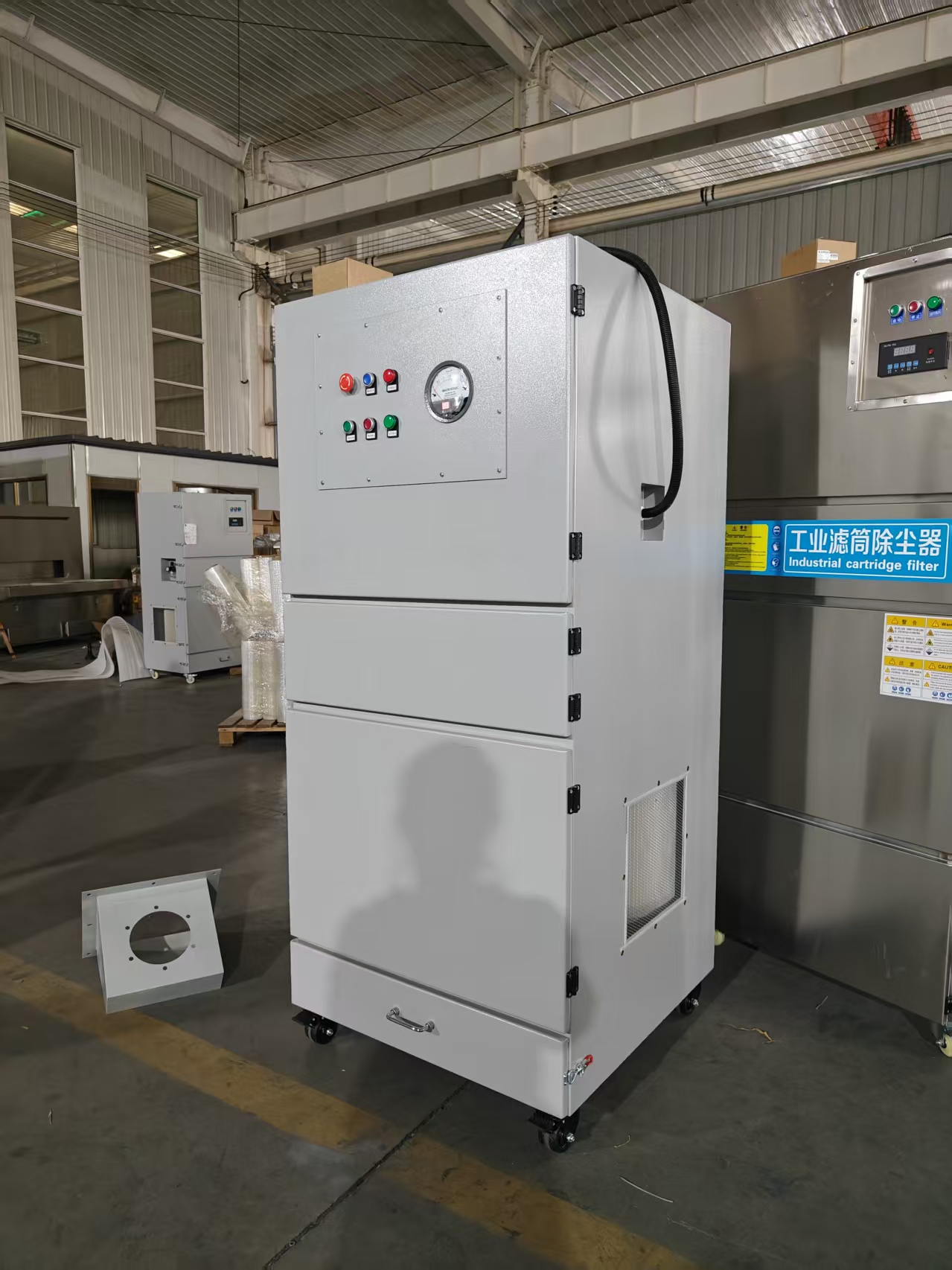
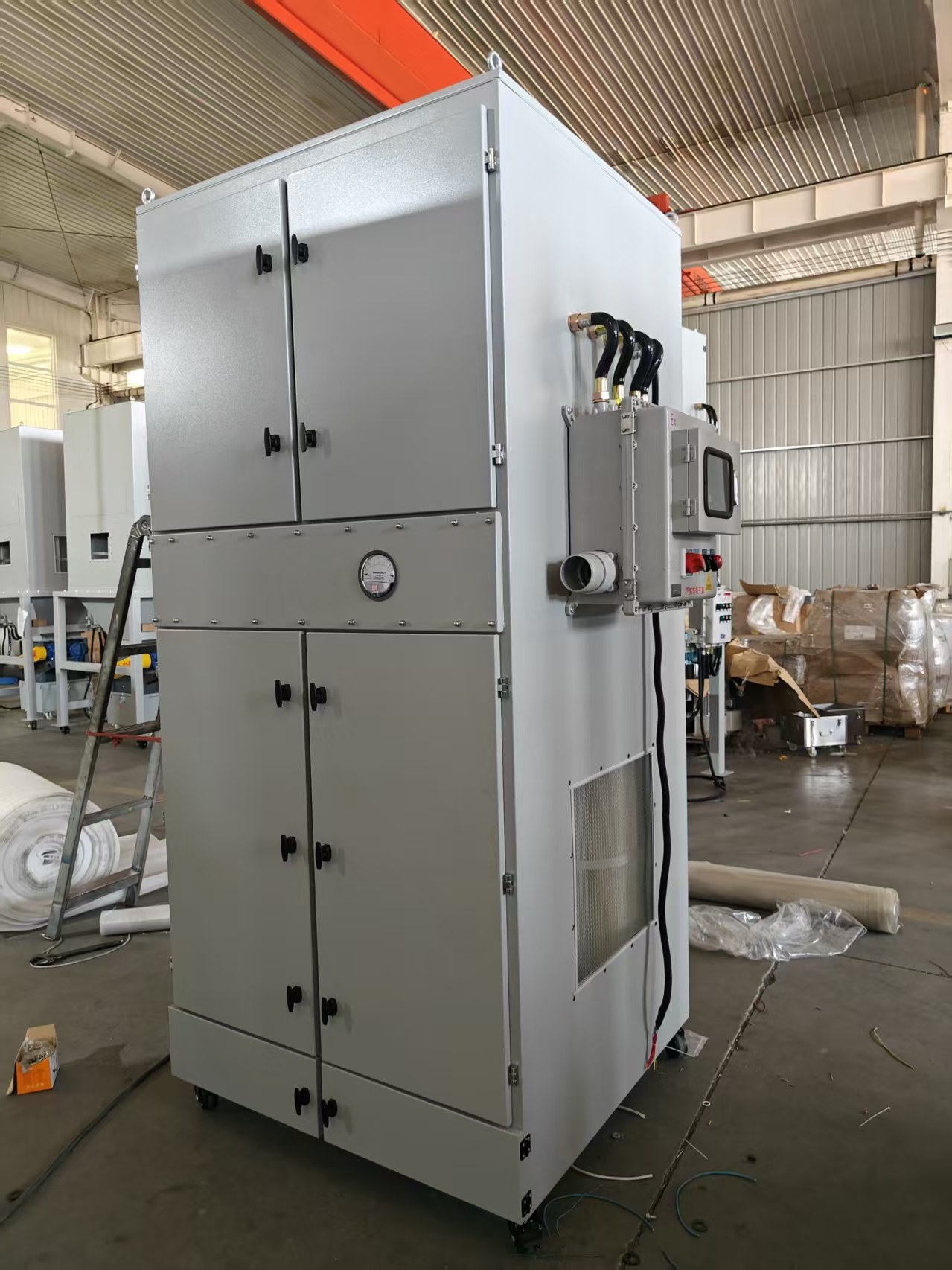
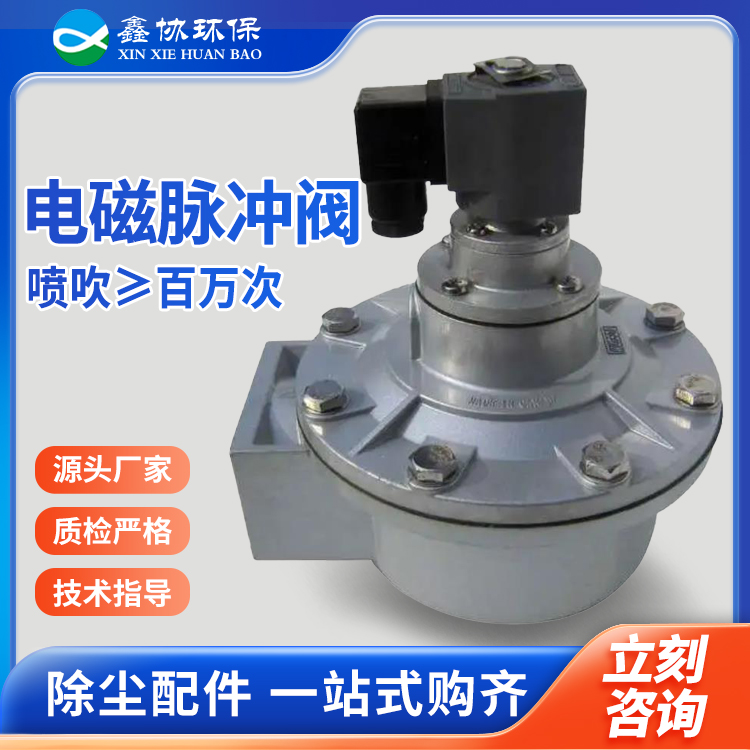
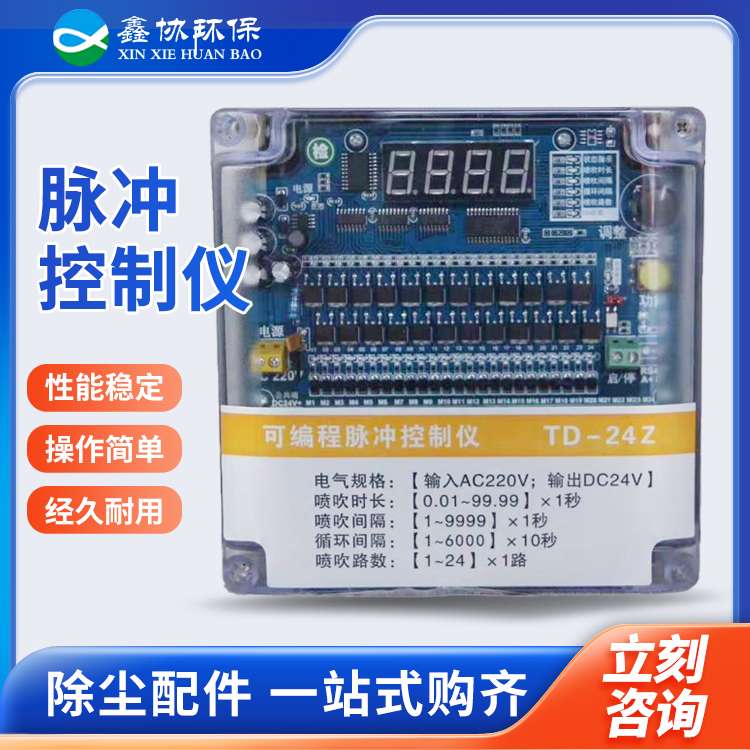
Central pulse-jet unit with 24 × Ø352 × 660 mm Donaldson-class flame-retardant PTFE-membrane cartridges (10.5 m² each, 0.3 µm), PLC online differential-pressure pulse cleaning (800–1,200 Pa), and sealed drawer-type ash bins for high-density steel dust.
Backward-blade centrifugal fan with 18.5 kW VFD on the clean side — it never sees dust or sparks. Pressure display, fault alarms, overload/phase-failure protection and post-shutdown purge come standard; resistance budget (≈ 2,550 Pa) verified against the 2,800 Pa fan rating.
As a defense-industry group, Jianshe Industrial's workshops are held to both environmental and work-safety scrutiny — the design answers both:
The pulse-jet cartridge collector, spark protection components and control cabinet for this system are manufactured and pre-assembled at our Nanchuan plant before site installation.
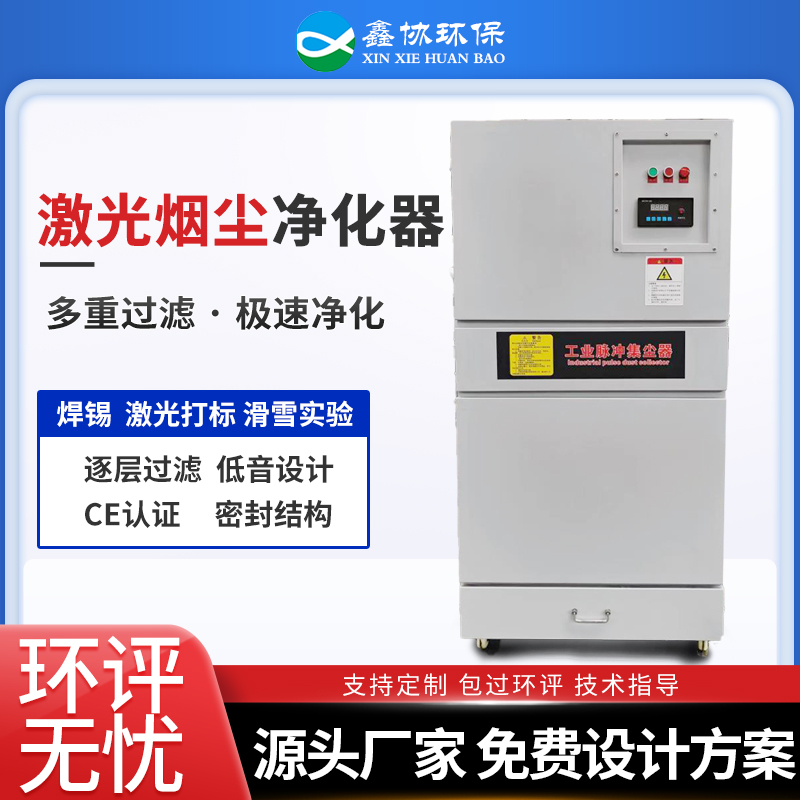
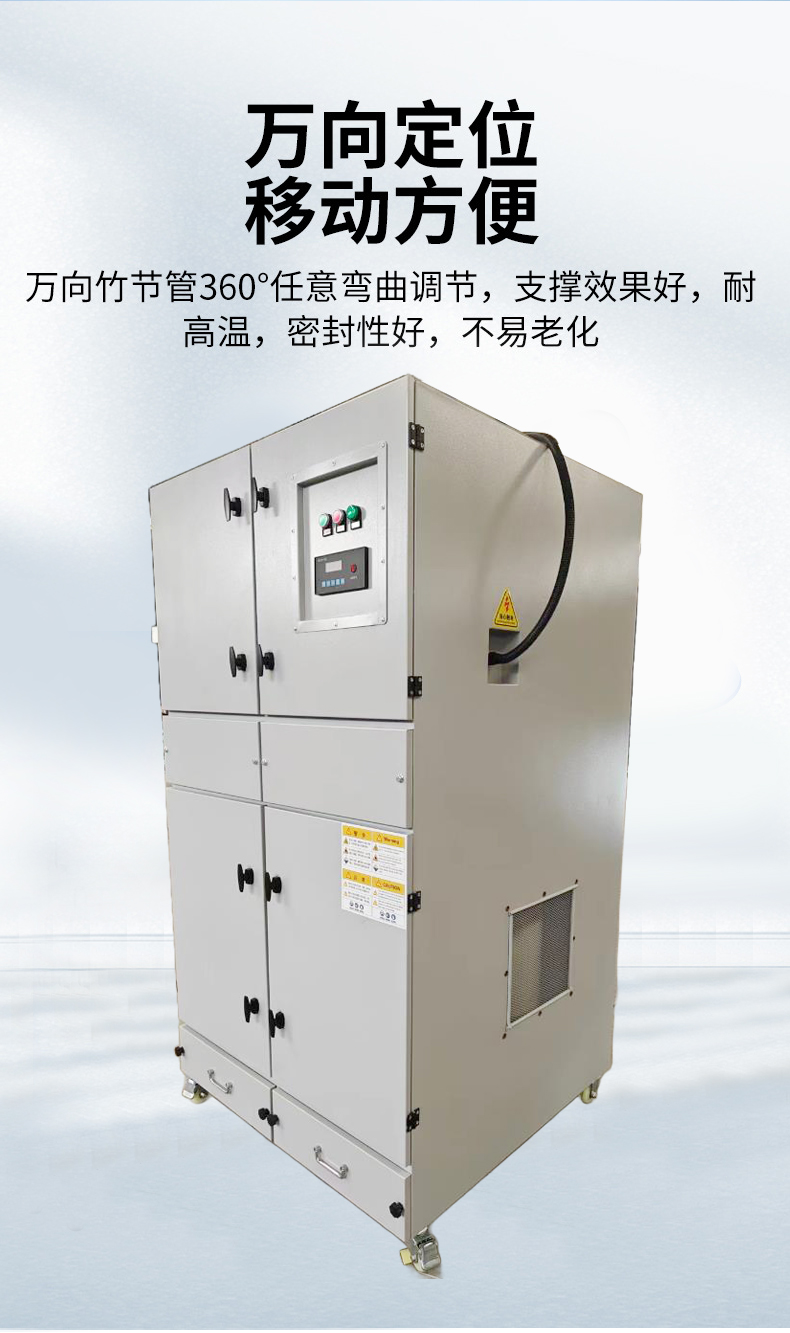
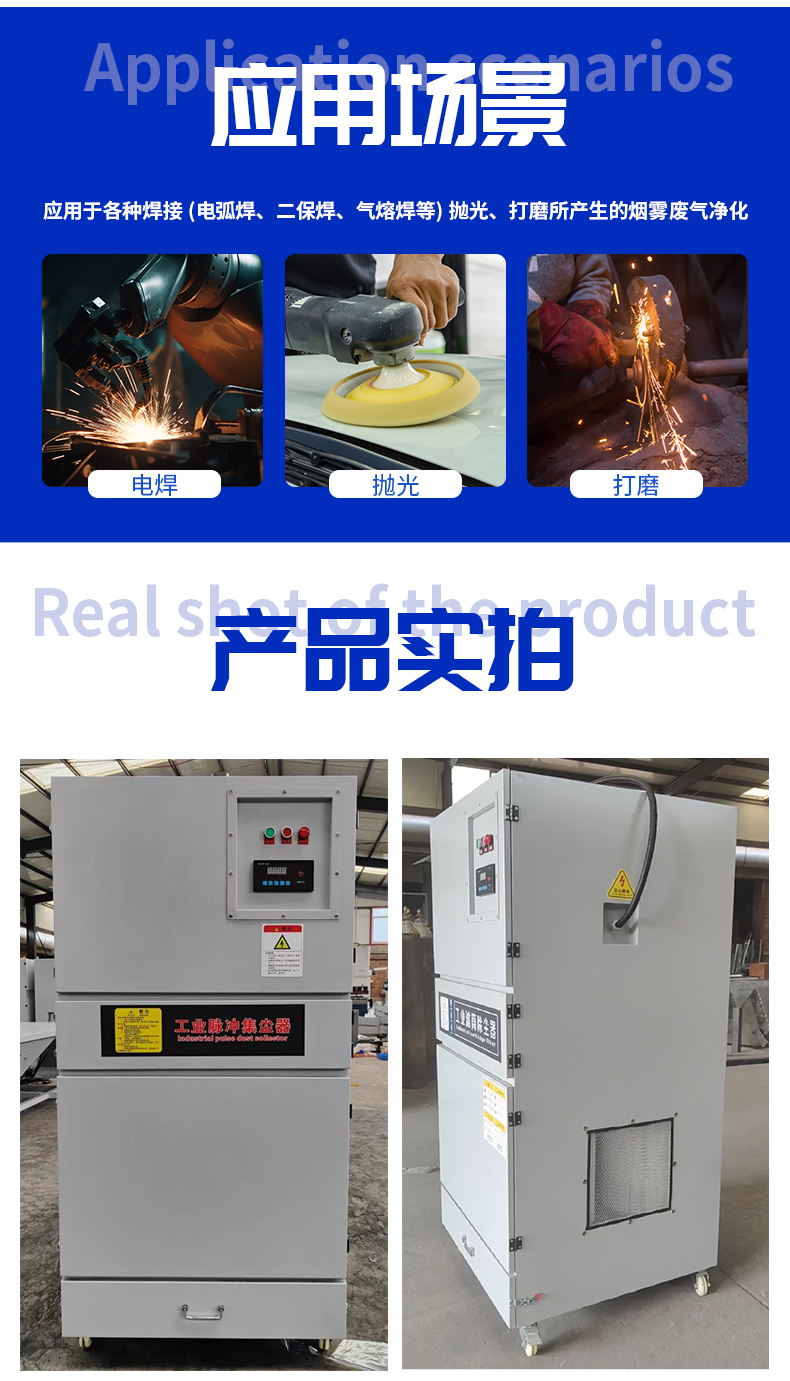
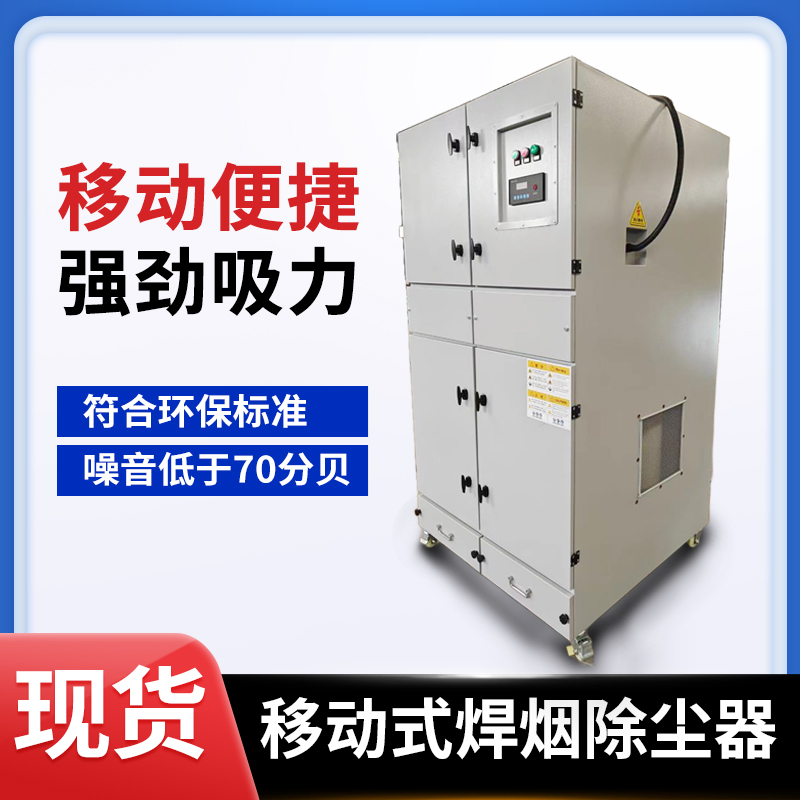
Station-by-station capture, spark-safe ducting and a fire-defended cartridge collector — one contractor, one acceptance test. Send us your station list for a written proposal within 24 hours.
Discuss Your Project